
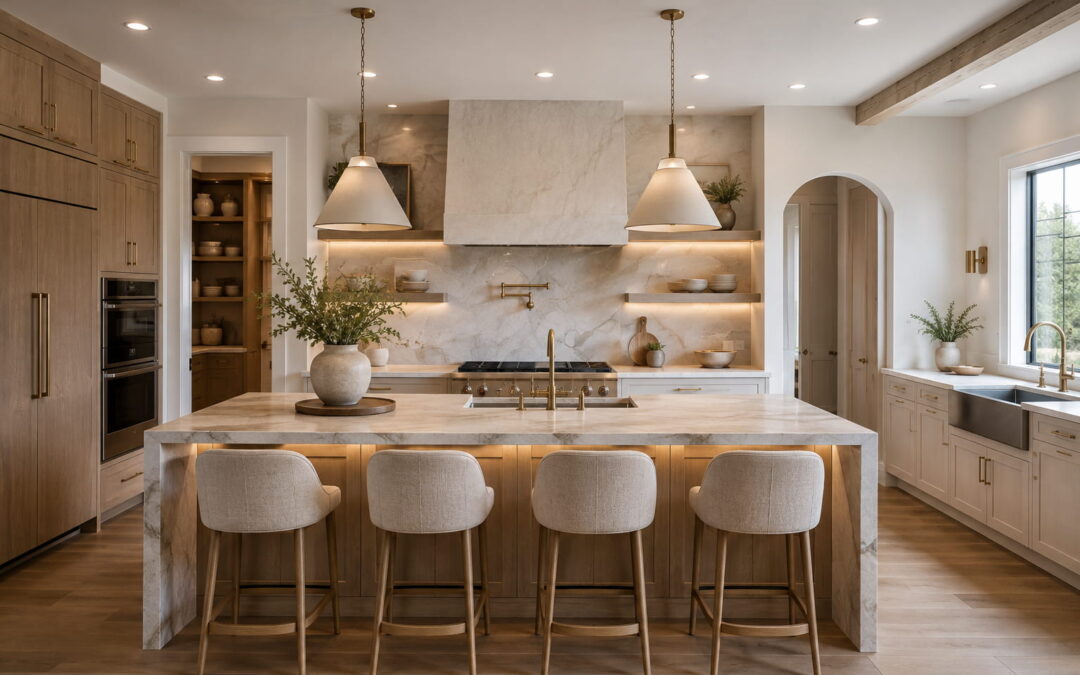
Florida does not care what floor looked good in a Colorado mountain house. Humidity, slab moisture, sand, pool traffic, and the occasional storm surge will find the weak product. In a custom home you get one chance to spec this right. Pick by room and by how the house actually lives, not by a single showroom sample.
There is no universal winner. There is a wrong answer, and it is solid hardwood glued to a Florida slab.
What the climate does to a floor
Most custom homes here sit on concrete or over a flood-zone foundation that still deals with moisture. Slabs breathe vapor up from wet ground. Indoor air sits in the 45 to 60 percent range when the AC is running and jumps when doors stay open to the lanai or the system is off. Wood moves with that swing. Vinyl and porcelain do not.
Add the daily abuse that is specific to this state. Wet feet from the pool. Sand from the beach or the Sound. Dogs. Sliding glass walls that stay open. A kitchen that sees more spills than a northern house because people live outside and walk back in. After Helene and Milton, a lot of owners also asked a harder question: if this floor sits in water for a day, is it a mop job or a tear-out?
That is the filter. Comfort and looks come after.
Luxury vinyl plank
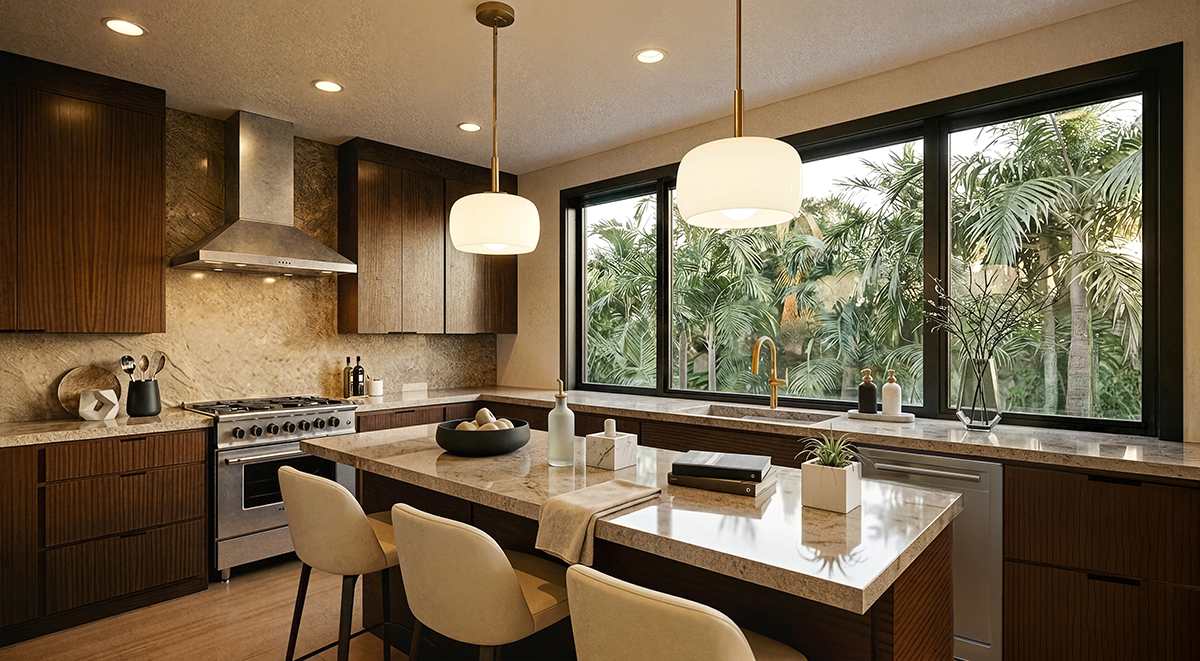
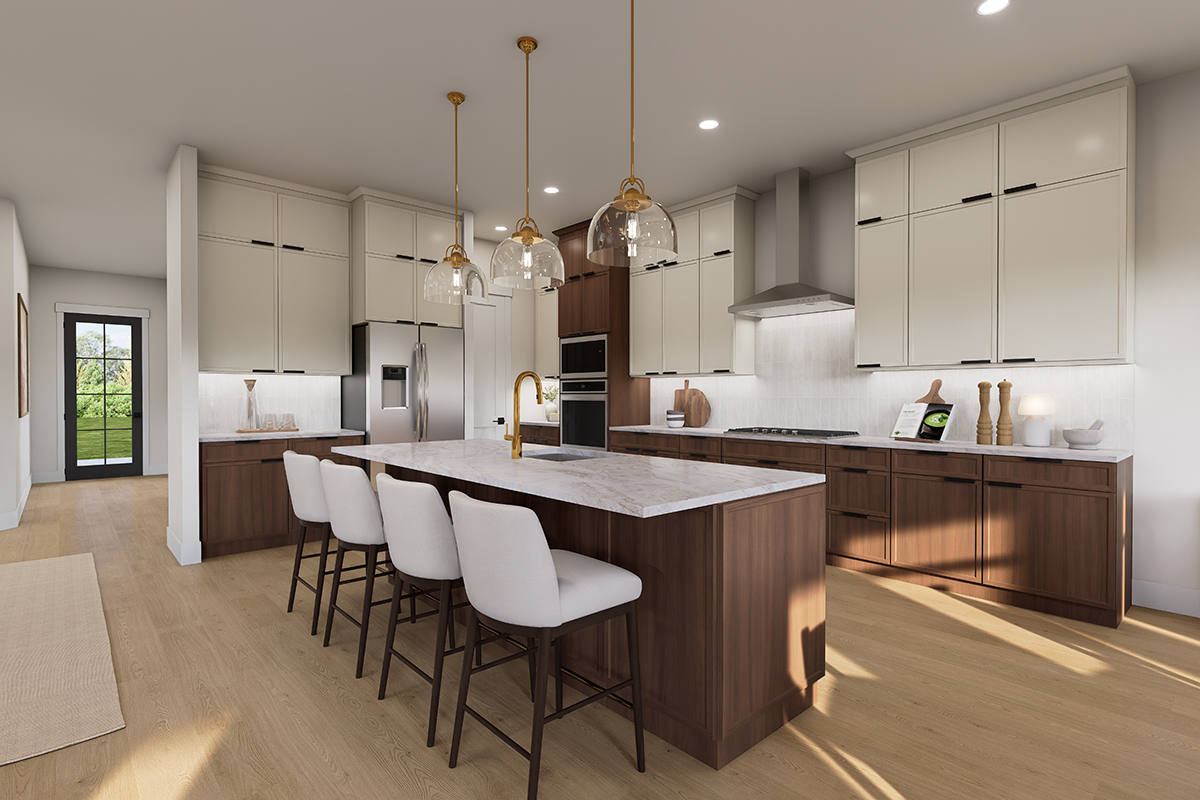
Modern LVP, especially rigid-core SPC, is the workhorse in Florida custom homes for a reason. The plank is waterproof through the core, not just on the print layer. It stays dimensionally stable when humidity swings. It floats over a slab, so minor vapor is easier to manage than with glue-down wood. Sand and claws scuff a cheap wear layer. They do not wreck a 20-mil or 22-mil commercial-grade face the way they wreck a stained oak finish.
Installed cost in 2026 typically runs about $4 to $9 per square foot for decent to premium product, faster than tile, cheaper than real wood. A 1,500-square-foot main floor is often in the $8,000 to $14,000 range before fancy trim. That gap funds better windows or a real seawall conversation, which matter more than a veneer.
Limits are honest. It is not real wood. You cannot sand it. Cheap 12-mil rental-grade plank looks like cheap rental-grade plank in a $1 million house. Glue-down jobs still need a slab moisture test. Standing flood water for days can still force a replacement even if the core did not swell like laminate. Specify SPC or WPC with a real wear layer, tight locking system, and a product rated for wet rooms if it goes in the kitchen.
Best use in a custom plan: living areas, hallways, bedrooms, upstairs in an elevated coastal house, vacation homes that sit empty, and any room that sees pets and sand. It is the right whole-house choice when the budget or the flood file says wood is a vanity.
Porcelain tile
Porcelain is the closest thing Florida has to a permanent floor. Absorption is typically under 0.5 percent. It does not cup. It does not fade in a west-facing room. It stays cooler in August. After a flood, you dry the house and keep the floor. That is why waterfront rebuilds keep coming back to wood-look porcelain instead of another hardwood experiment.
Large-format plank and slab looks have closed the “tile looks like a 1994 foyer” argument. You can run 24×48 wood-look porcelain from the sliders to the kitchen and it will read as a finished custom house, not a builder special.
Cost is the trade. Installed porcelain in Florida commonly lands $8 to $18 per square foot depending on size, pattern, and prep. Large-format work needs a flatter slab, better thinset, and a tile setter who knows movement joints. Grout is the maintenance item. Cheap grout stains. Good grout and a sealed joint last. The floor itself can outlive the cabinets.
Tile is hard and loud. If you stand in the kitchen three hours a night, you will feel it. If you want the cool surface in summer, that hardness is a feature. Radiant heat under tile exists. Most Florida custom homes skip it because the slab is already warm enough most of the year.
Best use: bathrooms, laundry, kitchen, entries, anything that opens to a pool deck, and the entire first floor of a flood-zone house if you want one surface that survives a surge. Do not put ceramic in a shower when the spec called for porcelain. Ceramic absorbs more water. Use porcelain.
Hardwood, and the version that belongs here
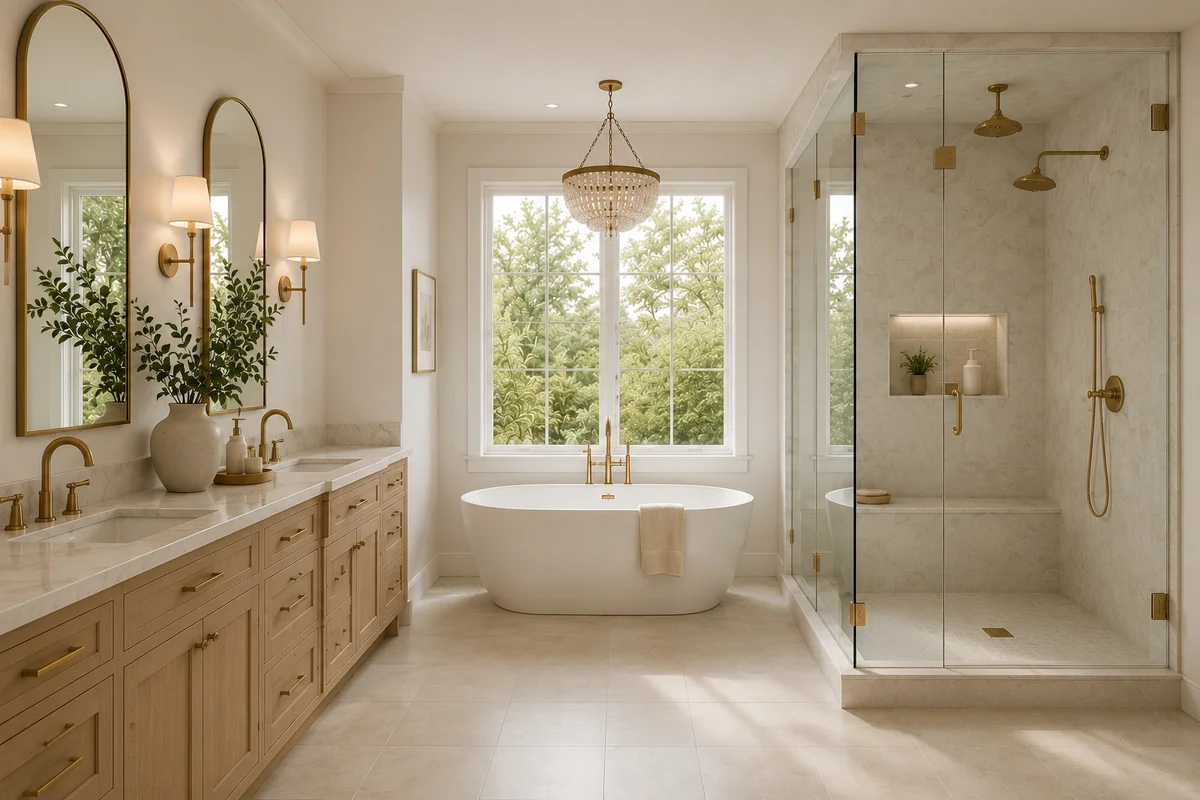
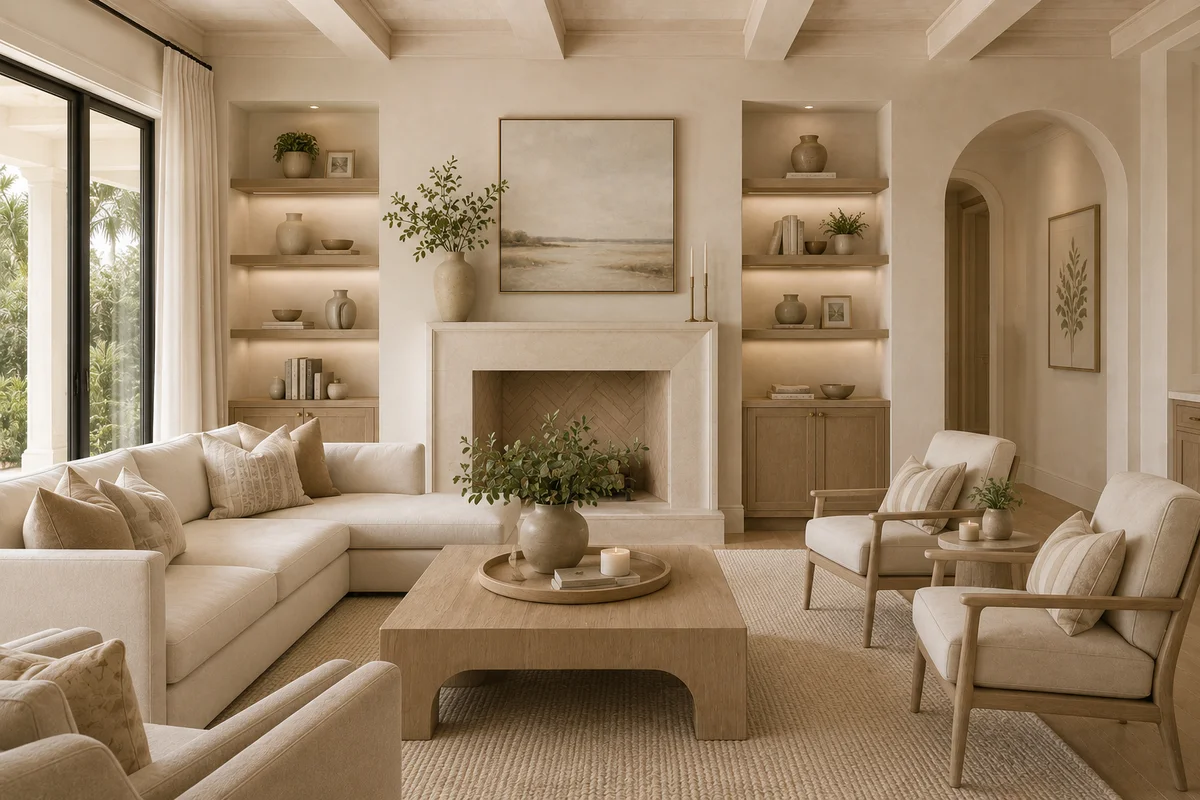
If the word is hardwood, the product should be engineered, not solid, on a Florida slab. Solid plank expands and contracts as one piece of wood. On porous concrete with Gulf humidity, it cups and gaps. Engineered plank uses a real wood wear layer over a cross-ply core. That core fights movement. It is the only wood floor that belongs in most new Florida houses.
It still has rules. Test the slab. Calcium chloride or in-situ RH probes are not optional. If the reading is high, you mitigate or you pick another product. Keep the house conditioned. A snowbird house with the AC off for three months is a bad candidate. Keep it out of full baths, laundry rooms, and the wet path from the pool. A 3 mm or thicker wear layer is what you pay for if you ever want a refinish. Thin builder veneer is a one-life floor at a wood price.
Installed engineered wood in this market often runs $10 to $22 per square foot. European wide-plank oil-finished product sits at the top. That money buys feel and resale in a luxury living room. It does not buy flood insurance.
Best use: primary suite, dining room, and dry living rooms in a house that stays occupied and air-conditioned. Pair it with tile at the wet edges so one overflowing sink does not take the whole first floor.
How to spec it in a custom home
Stop looking for one material to run wall to wall just to avoid a transition strip. Transitions are cheaper than a failed floor.
A plan that works in Tampa Bay custom work:
- Porcelain in baths, laundry, kitchen, and the sliders-to-pool path.
- SPC LVP through bedrooms, halls, office, and upstairs living if the house is elevated.
- Engineered hardwood only where you will see and feel it every day and the moisture plan is clean.
On a new slab, put the vapor strategy in the construction set, not as a change order after the flooring vendor shows up. On an elevated coastal house, you are often over wood subfloor, which changes fasteners and acoustic underlayment. Sand gets everywhere near the water. Dark grout and a textured LVP or wood-look porcelain hide it better than a glossy white oak.
Skip laminate. The wood-fiber core swells. Skip bargain LVP in a custom house. Skip solid hardwood on grade. Skip “waterproof hardwood” marketing that means a factory finish and a prayer.
The decision
If the house is a primary custom residence on a dry lot and you want real wood under the dining table, engineered hardwood in the dry rooms and porcelain in the wet rooms is a defensible luxury spec.
If the house sees dogs, grandkids, a pool, or sits in AE or VE, LVP plus porcelain is the grown-up spec. You get the look, you keep the floor after a bad week of weather, and you do not spend the hardwood budget fighting physics.
Tile wins on lifespan and water. LVP wins on cost, comfort, and forgiveness. Hardwood wins on authenticity in the rooms you protect. Pick the rooms first. The product follows.