A pool on a custom home in Pinellas County is rarely just a rectangle anymore. Buyers who are already spending on a lot, a coastal foundation, and a full interior want the pool to feel like part of the house, not a backyard add-on. The pools that get the most use share a few things: they are designed with the architecture, they use features people actually enjoy, and they are built for the climate and the lot.
Here is what resort-style means in practice, and what to think through before the plans are final.
Start with the shape of the lot and the house
A good pool follows the house. On a waterfront lot, the pool usually sits between the house and the water, and its edge and position decide what the view feels like from the great room, the kitchen, and the primary suite. A pool offset from the main sight line can stay visible from the key rooms without blocking anything. A pool placed directly in front of the water can frame the view or interrupt it, depending on the edge.
Lot size and setbacks set the real limits. Pool setbacks from property lines, seawalls, and easements are set by the county or city, and flood zone rules affect how the pool, the deck, and the equipment are built. In higher-risk flood zones, some pool and deck work is regulated differently, so confirm with the jurisdiction before you commit to a design.
Think about the pool as an outdoor room with walls. Where will people sit? Where is the sun at 4 p.m.? Where do the lights reflect? A designer who works with the architect can place the lanai, the pool, and the planting so that the water and the house work as one composition.
Features people actually use
The features we see requested most often are not decorative. They make the pool easier to live with.
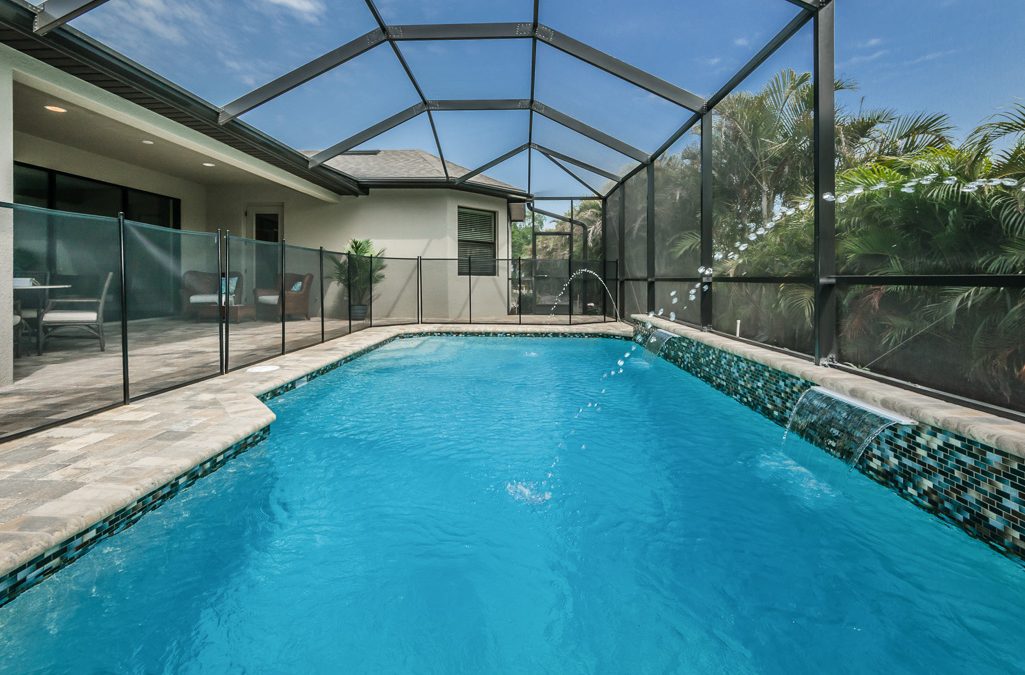
A sun shelf, sometimes called a tanning ledge, is a shallow area where people can sit or lounge in a few inches of water. It is popular with families and with anyone who wants to cool off without swimming. A spa that spills into the pool, or a separate spa with its own heater, is another common request and fits the cooler months well. Swim-up bars and built-in benches appear on larger projects. Where space allows, a lap lane or an extended length gives the pool a purpose beyond lounging.
Vanishing or infinity edges are popular on waterfront lots because the water appears to continue to the horizon. They are also a more complex build: they need a catch basin, additional plumbing, and careful engineering, and they are not right for every site. Ask your builder whether the edge makes sense for the view, the wind, and the maintenance you want to take on.
Other additions that people notice: deck jets and bubblers, a heater or heat pump so the pool is comfortable in cooler months, LED lighting that can change color or dim, and a pool bath or outdoor shower near the lanai so wet swimmers do not trek through the house.
Materials and finish for a coastal climate
Florida sun, heat, and salt air are hard on pool surfaces and decking. The finish you choose affects how the pool looks, how it feels underfoot, and how long it lasts.
Plaster is the traditional interior finish and is generally the least expensive. Pebble and aggregate finishes are more durable and are widely used on higher-end pools. Glass tile or large-format porcelain tile at the waterline and on the shelf gives a resort feel and is easier to keep clean than plaster alone. Your pool builder can show you samples and explain how each finish handles chemistry and wear.
Decking should stay cool underfoot and resist slipping. Pavers, travertine, and some porcelain pavers are common choices. Darker surfaces get hot in the Florida sun, which matters for bare feet. Test samples in the sun before you decide. If you have a saltwater chlorination system, check with the supplier about which stone and metals hold up well, since salt can be hard on some natural stone and on metal fittings.
On the water side, a pool near a seawall or in an AE or VE flood zone brings additional considerations. Pool equipment and electrical gear should be located and protected according to local rules and manufacturer guidance, and your builder can tell you what the county expects.
Safety, equipment, and maintenance
Florida has pool safety requirements for residential pools, including that a new pool have at least one approved safety feature, such as a barrier, a safety cover, door alarms, or self-closing and self-latching doors. The details are set by state law and local code, so confirm what applies with your builder and the jurisdiction. If children or grandchildren will use the pool, build that planning in from the start and do not retrofit it later.
Equipment matters more than most buyers expect. A properly sized pump, a filter, a heater or heat pump, a chlorination system, and automation that lets you control lights and heating from a phone are standard on higher-end pools. Place the equipment pad where it is accessible for service but not in your sight line or next to a bedroom window, and give it proper drainage and ventilation.
Maintenance is part of ownership. Debris from live oaks and palms, afternoon storms, and the Florida sun all add to the work. Decide whether you want a service, and whether you will have a screen enclosure or a retractable system to reduce debris. A design that makes cleaning easier is a design that will look good in year five.
Sequence the pool with the house
The best pools are planned with the house, not after it. Coordinating the pool with the foundation, site grading, utilities, and lanai means the equipment, the deck, and the outdoor kitchen all sit where they should and the contractors are not working around each other. It can also reduce the chance of damage to finished landscaping or hardscape later.
Ask your builder when the pool will be built relative to the house, who is responsible for permits and inspections, and how the pool will be protected during construction. Ask what the warranty covers on the structure, the finish, and the equipment, and who handles the service call if something goes wrong.
If you are planning a custom home in Pinellas County and want a pool that fits the house and the lot, contact Gulfwind Homes at (813) 854-4715 or visit https://gulfwindhomes.com/. Our main office is at 2264 Bayshore Blvd, Dunedin, and we can walk through the options with you before the design is final.