
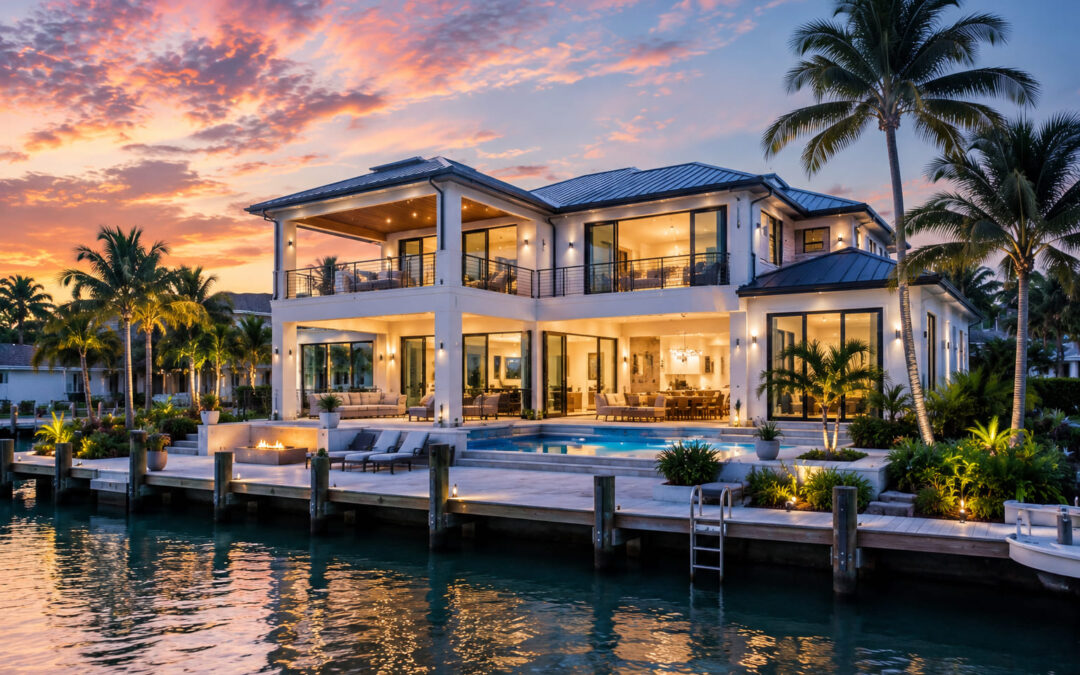
Two waterfront lots can have the same width, the same price, and the same flood zone, and still produce completely different houses. The difference is which way they face. Orientation decides where the sun hits the lanai at 4 p.m., which rooms get the view, how much the neighbors see, and how hard the air conditioning has to work. It is one of the first things to study when you evaluate a homesite, and one of the hardest to change once the house is built.
In Pinellas County, the geography adds its own twist. The county is a peninsula, so water sits on both sides, and canals and inlets cut the shoreline into lots that face every direction.
Know which way the water faces
Start with a compass, not the listing description. The Gulf side of the county, including the barrier islands, generally faces west. The Sound side, including parts of Crystal Beach, Ozona, and Dunedin, also faces west across St. Joseph Sound. The Tampa Bay side, including parts of St. Petersburg, generally faces east or south. Canal and finger-island lots can face any direction, and a house on a bend may have two exposures.
That matters because the view and the sun usually come from the same direction. A west-facing lot gets sunsets over the water, which is what many people buy for. It also gets low afternoon sun straight through the glass and onto the lanai during the hottest part of the day. An east-facing lot gets soft morning light and a shaded lanai in the afternoon, but the sunsets happen behind the house.
Neither is better in the abstract. The question is how you live. If you are home in the morning and want to be outside for coffee, east may suit you. If evenings are your time and you like to entertain at sunset, west is the draw, and you will plan around the heat. A north- or south-facing lot has its own mix, with side light that changes through the year.
Sun, heat, and design response
The sun moves across the sky differently in summer and winter. In summer it rises and sets farther north and is high at midday. In winter it travels a lower arc across the southern sky. That means a roof overhang that blocks high summer sun on a south-facing wall can still let in lower winter sun, which is often welcome. West sun is harder to control because it is low and strikes the wall and the glass at an angle.
For a west-facing lot, the design response is well known. Deep roof overhangs, a covered lanai, operable shading, and the right glass all help. Place the lanai so that it shades the main living areas. Consider putting less-used rooms, such as a garage, a utility room, or a storage space, on the hottest side as a buffer. Landscaping can also help: shade trees and tall plantings do real work over time, though on a waterfront site you may be limited by views, setbacks, and wind.
For an east-facing lot, the lanai may stay comfortable all afternoon, which suits dining and cooking. The sunrise side should still be planned: a primary suite with morning light can be lovely or wearing, depending on how you sleep. Window treatments and placement matter.
Orientation also affects energy use. Glass facing west or east is the hardest to manage, so size and specify it carefully. Talk with your builder about window selection and shading early, rather than after the elevations are drawn.
Views and how to frame them
A waterfront lot comes with a view, but the house decides how much of it you get. Placing the great room, the kitchen, and the primary suite so that they all see the water is possible on many lots and takes deliberate planning. A narrow lot may require a plan that stacks rooms on the water side and puts the garage and utility spaces toward the street.
Elevation changes the view too. In flood zones the living floor is raised, which often improves the sight line over seawalls, boats, and neighboring roofs. On an elevated plan, a second-floor terrace or a rooftop deck can open a view that the ground floor cannot offer, subject to height limits and local rules.
Think about what you will see over time. Boats, docks, neighboring homes, a channel marker, a bridge in the distance. Walk the site and stand where the main rooms will be, at the actual height of the floor. Ask your builder to help you read the survey and the elevation requirements so that the model of the view matches the real one. Take photos in different seasons and at different times of day.
Privacy and neighbors
Waterfront lots are open by nature, and that creates a privacy tradeoff. The same openness that gives you the view lets neighbors and boaters see in. On a canal lot, houses are often a short distance apart on both sides and across the water. On open water, the exposure is broader but the distances are greater.
Design can handle most of this. Place the most private rooms, such as the primary bedroom and bath, where they are not directly lined up with a neighbor’s windows. Use a side-yard wall, a screen, or a planting to block sight lines at the pool without blocking the view of the water. Choose window heights and placement with the neighboring house in mind. On a lot with a sideways view, a corner window can bring in water views while looking away from the next house.
Setbacks set the minimum distance to the property line, and the zoning of your area sets the limits on height and coverage. Those numbers vary by jurisdiction, so confirm them with the county or city before you rely on a plan.
Wind, water, and the practical details
Orientation also shapes how the house deals with weather. Prevailing breezes change by season, and a lanai that catches the breeze in spring may be exposed to driving rain in a summer storm. A house that faces open water takes the full force of wind from that direction, and the structure, the openings, and the roof design all need to account for it. The Florida Building Code wind requirements apply, and your engineer will design for the conditions at your site.
Think too about access and utilities. Where do the driveway, the garage, and the street side sit relative to the water? Is the seawall or dock on the side of the lot that makes sense for the boat? Where do pool equipment, air-conditioning units, and generators go so they are out of view and not in the way of the flood plan?
Good orientation does not mean finding a perfect lot. It means knowing the strengths and weaknesses of the one you have and designing for them from the first sketch.
If you are looking at a waterfront homesite in Pinellas County and want help thinking through how the lot’s orientation will shape the house, contact Gulfwind Homes at (813) 854-4715 or visit https://gulfwindhomes.com/. Our main office is at 2264 Bayshore Blvd, Dunedin, and we are happy to talk through the site with you before you buy or finalize a design.